
In order to improve our services and the browsing experience, we inform you that we use cookies.
Accept
Refuse
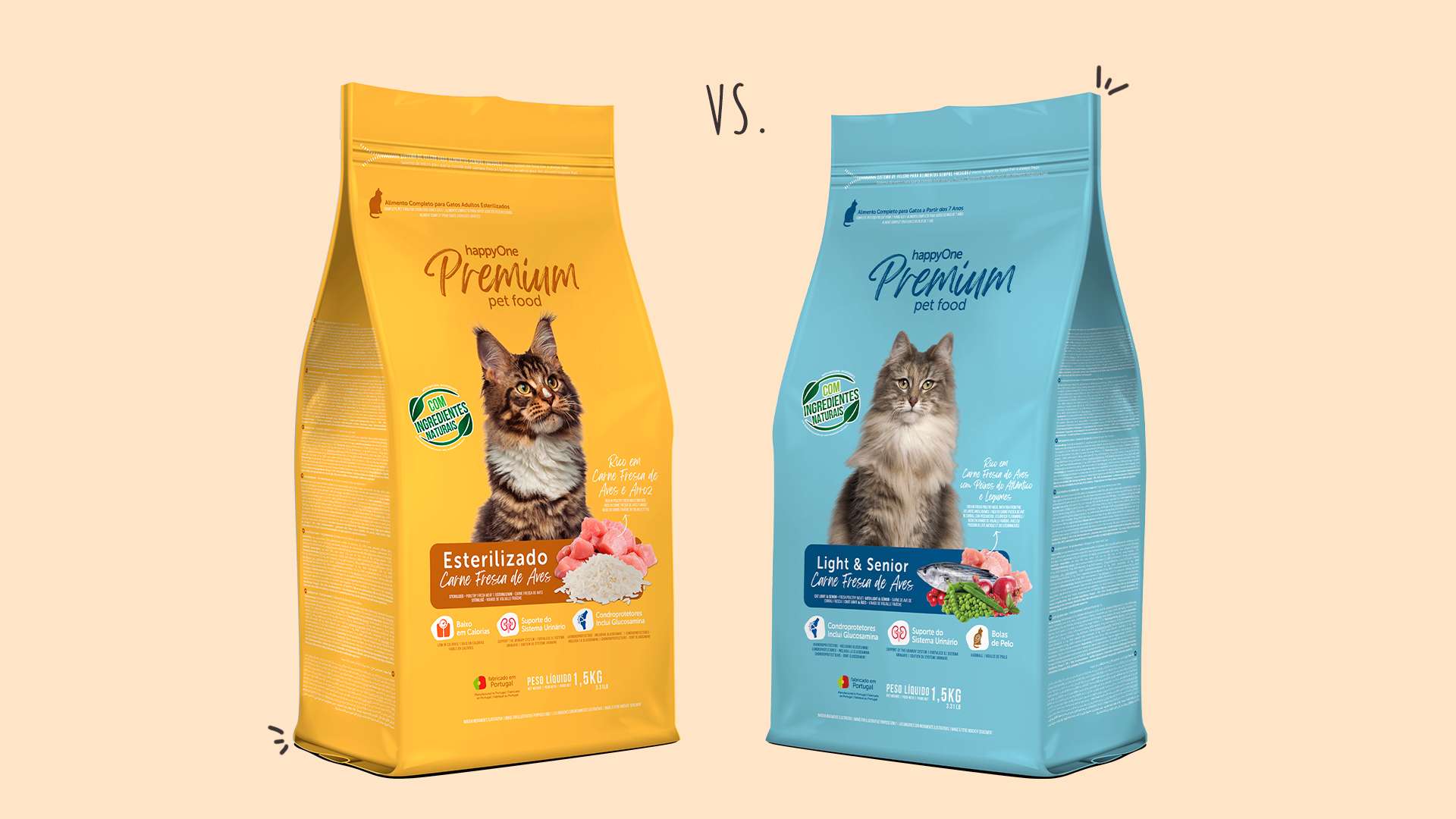
Find the Best Option for Your Pet
After sterilisation or when a dog or cat enters their senior years, it is normal to have doubts about which type of food is the best choice. Terms such as "Sterilised" and "Light & Senior" often appear on pet food packaging, and while both options help with weight management, they are intended for different situations.
What Is Sterilised Pet Food?
Sterilised formulas have been specifically developed for cats that have been neutered/spayed or that tend to gain weight. In these cases, they need a diet with fewer calories and lower fat content. The main goal is to prevent weight gain while providing complete and balanced nutrition adapted to the metabolism of sterilised cats.
Are Sterilisation and Weight Gain Always Linked?
Not necessarily. What often happens is that, after sterilisation, pets tend to become calmer and burn less energy throughout the day.
If their diet remains the same (or if they receive too many treats), they may gain excess weight. In other words, weight gain occurs when the animal consumes more calories than it burns.
What Is Light & Senior Pet Food?
Light & Senior formulas are recommended for dogs and cats over the age of seven and are suitable when pets enter their senior years, meaning they have lower activity levels, begin to gain weight more easily, and require nutrition adapted to their age.
So... Which Option Should I Look For?
It's simple!
If you have an adult sterilised cat, choose Sterilised food: lower in calories and fat, designed to help prevent weight gain.
If you have a dog or cat over the age of seven, look for Light & Senior options: adapted to the senior life stage while helping with weight management.
What If My Pet Isn't Sterilised or Senior but Is Gaining Weight?
We still recommend choosing a lower-calorie food to help prevent obesity.
Some common signs that it may be time to adjust your pet's diet include:
 gradual weight gain;
reduced energy or less interest in playing;
difficulty feeling the ribs;
an undefined waistline;
constant appetite despite low activity levels.
If you have any doubts, the best option is to consult your veterinarian and monitor your pet's weight regularly.
The Right Portion Is Just as Important as the Right Food
Even when choosing the ideal formula, weight management always depends on the daily feeding amount.
That's why it is essential to follow the recommended feeding guide, adjust the daily portion according to your pet's weight and activity level, and avoid giving too many treats. Remember that the recommended daily feeding guidelines can always be found on the back of the packaging and on the product page.